Eluracat: a targeted answer to weight loss in chronically ill cats
Elanco’s capromorelin oral solution gives UK vets a licensed, mechanism-led option for cats losing weight to chronic disease, most notably chronic kidney disease. We look at how it works, what the trial data show and where it fits in practice.
Why weight loss matters
Unintended weight loss is one of the most consistent and least welcome features of chronic disease in cats. In chronic kidney disease (CKD), the decline often begins long before diagnosis: cats may start losing weight up to three years before CKD is confirmed, and the loss tends to accelerate afterwards. Low body weight and weight loss have also been linked with shorter survival in cats with cancer and heart failure.
The consequences go beyond the number on the scales. Loss of lean body mass, whether through age-related sarcopenia or disease-driven cachexia, affects strength, immune function and wound healing. Inappetence and visible wasting also weigh heavily on owners and frequently factor into euthanasia decisions.
How capromorelin works
Eluracat contains capromorelin, a selective ghrelin receptor agonist. Ghrelin is the hormone produced mainly in the stomach during fasting, and capromorelin mimics its action at two sites. In the hypothalamus it stimulates appetite; in the pituitary it prompts growth hormone release, which in turn drives production of insulin-like growth factor 1 (IGF-1) by the liver.
The resulting weight gain is thought to reflect both increased food intake and these metabolic changes. It is an important distinction for client conversations: Eluracat supports body weight but does not treat the underlying condition, so management of the primary disease must continue alongside it.
The evidence
Capromorelin first reached the market in the US as Elura, approved by the FDA in October 2020 for managing weight loss in cats with CKD. Eluracat received EU marketing authorisation in June 2023 and a Great Britain national authorisation in June 2024, where it is classified as POM-V. The UK indication is broader than the US label, covering body weight gain in cats with poor appetite or unintended weight loss resulting from chronic medical conditions.
The pivotal study was a masked, randomised, placebo-controlled field trial in 176 client-owned cats with a history of CKD and at least 5% unintended weight loss, with 118 receiving capromorelin and 58 a vehicle control over 56 days. More than 80% of treated cats maintained or gained weight, compared with around 40% of controls, and the mean difference between groups was 6.8% of body weight. A significant gain was already apparent by day 15. Most treated cats were in IRIS stage 2 or 3, and comorbidities such as dental disease, muscle loss and hyperthyroidism were common, so the population broadly reflects the cats seen in general practice. The trial was published in the Journal of Feline Medicine and Surgery in 2025.
Guidance has moved in the same direction. The 2026 IRIS treatment recommendations advise addressing reduced appetite, weight loss or muscle loss in cats from IRIS stage 2 onwards with medications such as capromorelin.
Dosing and practicalities
Eluracat is a vanilla-flavoured 20 mg/ml oral solution given directly into the mouth once daily at 2 mg/kg, equivalent to 0.1 ml/kg. The 15 ml bottle comes with a 1 ml dosing syringe and lasts around 30 days for a 5 kg cat. Once opened, it should be used within three months. The low dosing volume is a practical advantage for owners managing cats that are already receiving several medications.
Safety considerations
Hypersalivation is the most frequently reported reaction, seen in around one in five treated cats in the field study. It typically occurs at the time of dosing and resolves within minutes, and it did not appear to reduce efficacy. Warning owners in advance can prevent unnecessary concern. Vomiting and lethargy have also been reported.
Capromorelin can cause transient falls in blood pressure and heart rate for several hours after dosing, so concurrent use with sedatives, anaesthetic agents, ACE inhibitors or prazosin calls for a benefit-risk assessment. It can also transiently raise serum glucose; use in diabetic cats has not been evaluated, and caution is advised alongside steroids. The product is contraindicated in cats with hypersensitivity to the active substance, severe haemodynamic instability or acromegaly. Safety has not been assessed in cats under 10 months or under 2 kg.
There is no fixed limit on treatment duration, but because UK safety studies ran for 90 days, longer-term use should rest on the prescribing vet’s judgement and regular monitoring of weight, body condition and food intake.
Where it fits in practice
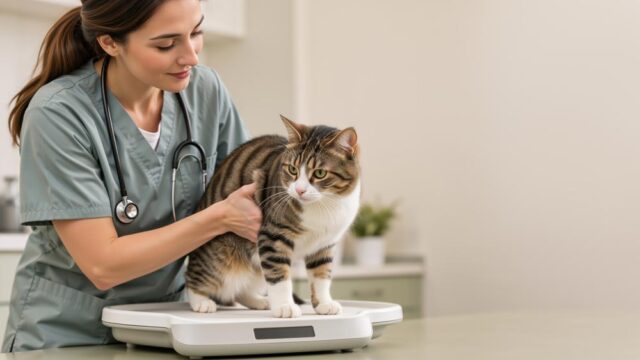
For clinics, Eluracat offers a licensed, once-daily option with a clear mechanism and a defined evidence base, sitting alongside established approaches such as dietary management and other appetite stimulants. Its real value may lie in prompting earlier action. Routine weight tracking at every visit, particularly in senior cats, can flag decline before it becomes obvious and give teams the opportunity to intervene while there is still condition to protect.