Python becomes first snake treated with electrochemotherapy
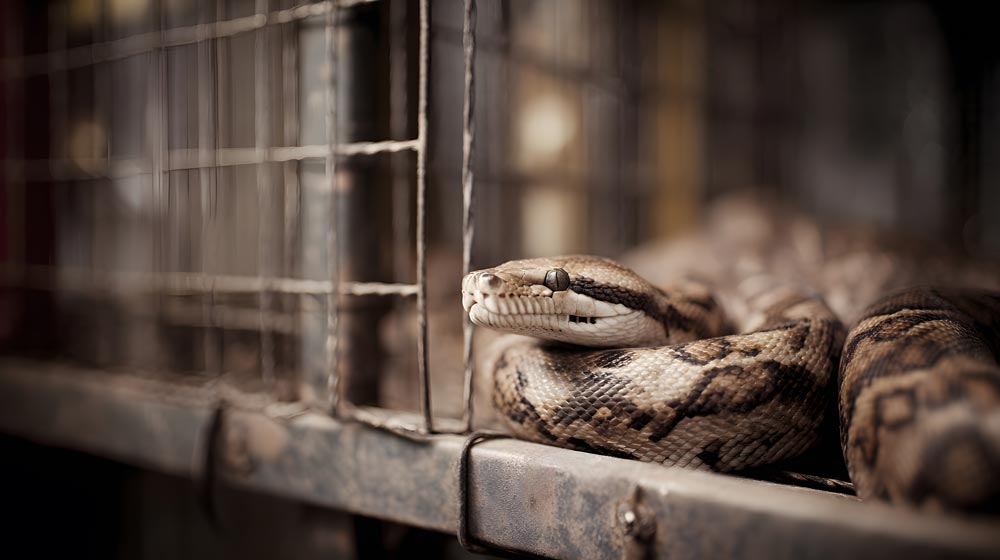
A reticulated python at Chester Zoo is cancer-free after vets combined jaw surgery with electrochemotherapy (ECT) – thought to be the first time the technique has been used in a snake.
The 15ft (4.5m), 50kg female, named Jodie Foster, had a recurrent fibrosarcoma that was eroding her mandible. Zoo vets teamed up with oncology specialists from the University of Liverpool to adapt a treatment more often used in human patients.
From reduced appetite to recurrent tumour
Keepers first noticed a problem when Jodie began eating less and spending longer periods inactive. Investigations identified a fibrosarcoma, a malignant soft tissue tumour, in her jaw.
The mass was excised, but it later recurred and invaded the underlying bone. Chester Zoo veterinary officer Ian Ashpole said the team judged that repeat surgery alone was unlikely to control the disease. With her ability to feed deteriorating, they approached Liverpool’s cancer specialists about adapting ECT for a reptile patient.
Two tables, warmed air and a hemimandibulectomy
A patient of Jodie’s size called for some improvisation. She was anaesthetised in her own enclosure and carried to the zoo’s veterinary centre. There, two operating tables were pushed together to create a surface roughly the size of a double bed.
Heated blankets and warmed air kept her body temperature stable throughout – a key consideration for an ectotherm under general anaesthesia. During a 90-minute procedure, Dr Ashpole removed the tumour and performed a hemimandibulectomy to take out the diseased section of jaw. ECT was then applied to target any residual cancer cells.
ECT pairs a chemotherapy drug – here, bleomycin – with short, controlled electrical pulses delivered directly to the tumour site. The pulses briefly increase cell membrane permeability, letting far more of the drug into the cancer cells. This allows lower doses to be used, and treatment is often completed in a single session.
Feeding normally again
Despite losing part of her mandible, Jodie can still strike, grip and swallow prey, according to the zoo. Months of post-operative monitoring have shown no feeding problems, and a recent check found no sign of recurrence. Dr Ashpole said she is back to her “bright and feisty” self.
Jose Alvarez Picornell, of the University of Liverpool’s Department of Small Animal Clinical Science, credited the result to close collaboration between zoo and university clinicians. He said the team plans to publish the case formally so vets elsewhere can learn from and build on the approach.
The case adds to the growing use of ECT in veterinary oncology, where it is already applied to cutaneous and subcutaneous tumours in dogs, cats and horses. It also highlights the challenge of managing neoplasia in long-lived captive reptiles, for which treatment options remain limited.