Survey finds over 60% of skin and subcutaneous masses in dogs are not aspirated
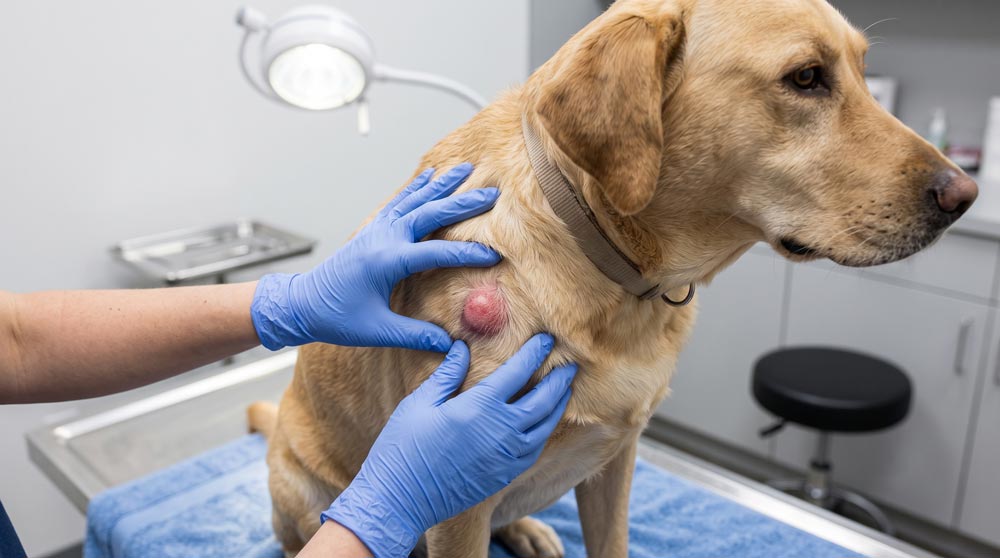
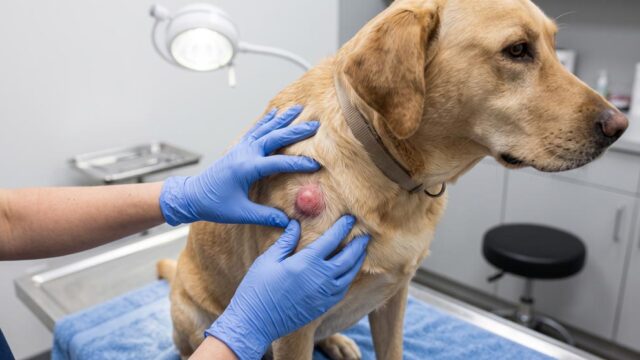
A US survey of veterinary professionals suggests fewer than four in ten dermal and subcutaneous masses are sampled by fine needle aspiration, with assumed benignity and cost the most common reasons.
Fewer than four in ten skin masses seen in US small animal practice are sampled by fine needle aspiration (FNA), according to a survey published in Veterinary Oncology.
On average, respondents said they aspirated 39% of the dermal and subcutaneous masses they examined, leaving 61% without an FNA. Only 29% said they aspirated more than half of the masses they saw.
The survey of 240 vets, practice owners and veterinary technicians across the United States was led by veterinary oncologist Dr Gillian Dank, Chief Veterinary Officer at HT VET. The study was funded by HT VET, which makes a handheld cancer-screening scanner for dogs.
Why masses go unsampled
Respondents gave three main reasons for not performing an FNA:
- the mass was assumed to be benign (35%)
- cost concerns (32%)
- the client declined for reasons other than cost (19%)
US guidelines from the American Animal Hospital Association (AAHA) recommend FNA or biopsy for any mass of 1cm or more that persists for a month or longer. Around 30% of canine and feline tumours arise in the skin. HT VET cites figures suggesting around 15% of these are malignant in dogs.
“Every vet knows lumps and bumps should be sampled,” said Shani Toledano, CEO of HT VET. Toledano said the findings point to a workflow and confidence problem rather than a gap in knowledge. When masses are not aspirated, pets may go home with no test beyond a physical examination.
The company’s screening tool
HT VET says its VISTA iQ scanner is designed to address these barriers. The handheld device combines heat diffusion imaging (HDI) with artificial intelligence to assess how a mass responds to gentle heat. It gives a cancer risk result during the consultation, and the company says the scan is quick, non-invasive and can be performed by veterinary technicians.
A validation study by HT VET, published in Veterinary Sciences in September 2026, reported a negative predictive value of 98%, based on an assumed malignancy rate of 15%.
In the company’s own survey of 77 customer clinics in April 2026, 51% reported performing more FNAs, 65% more biopsies and 79% more mass removals.
Toledano said the device is not intended to replace FNA, but to help make sure the masses that need sampling are sampled.
The full paper, Underutilisation of fine needle aspiration for canine and feline superficial masses: survey results (Dank et al, Veterinary Oncology, 2026), is open access at https://doi.org/10.1186/s44356-026-00077-0.