£800,000 funding to test bacteriophage product against drug-resistant Salmonella in chickens
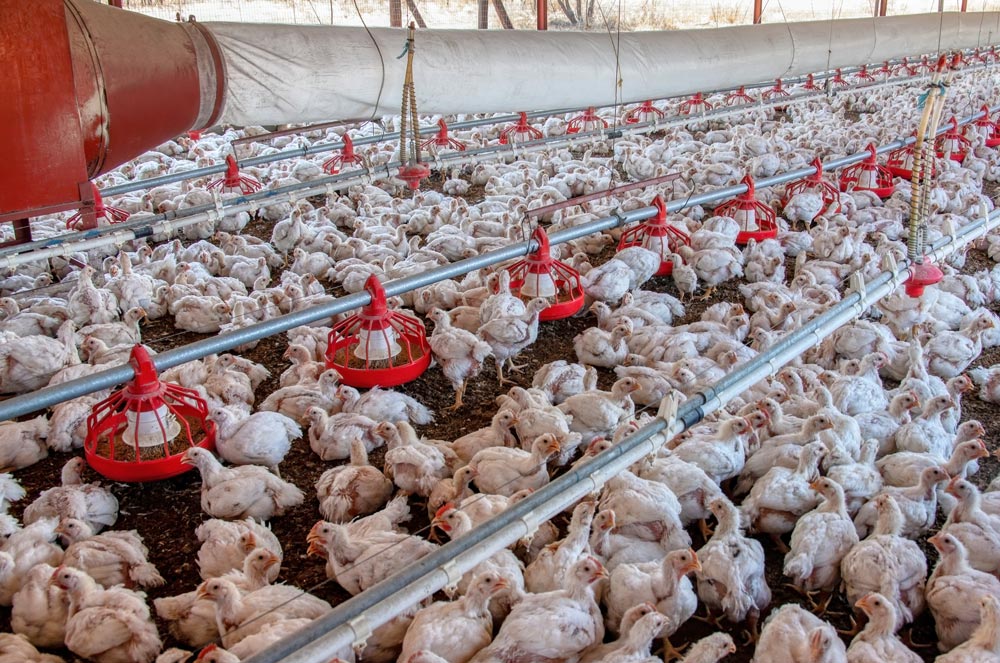
A bacteriophage product designed to prevent Salmonella in broiler chickens is set for further testing after researchers secured a share of £800,000 from the Biotechnology and Biological Sciences Research Council (BBSRC).
The product was developed by scientists at the University of Leicester’s Becky Mayer Centre for Phage Research and has already been trialled successfully in broilers. Bacteriophages are viruses that infect and destroy specific bacteria. They are designed to leave human, animal and plant cells unharmed.
The new funding brings Leicester together with the University of Surrey, the University of Nottingham and Carus Animal Health. The team will test the product against emerging and multi-drug-resistant Salmonella isolates. Using an in vitro chicken gut model, they will establish whether it stays effective against the strains currently circulating on farms.
Why it matters
Salmonella remains an important foodborne pathogen worldwide and causes diarrhoeal disease in people. Stopping colonisation at farm level is a key route to keeping it out of the food chain. Growing antimicrobial resistance has also increased interest in phages as an alternative to antibiotics in poultry production.
The researchers estimate that Salmonella infects more than 90,000 people a year across the EU. They also say it costs the farming industry billions of pounds annually.
The next steps
Prof Roberto La Ragione, professor of veterinary microbiology and pathology at Surrey, described the product as a valuable opportunity to control the pathogen before it reaches the human food chain. He said the planned studies would assess how well it works against a range of Salmonella isolates.
Prof Martha Clokie, of Leicester’s Becky Mayer Centre for Phage Research, said the team had already shown that its phages could prevent Salmonella infection in chickens and could be produced at scale. The next step, she said, was to show the product works reliably against today’s strains and to gather the evidence needed to bring it closer to use on farms.
Dr Anisha Thanki, also of Leicester, said the work would look closely at the product’s safety and its effects on the birds. She stressed that “a product has to work in real poultry settings, not just in the lab”.