Bluetongue: 2026 is the UK’s worst BTV-3 season yet, and more of the work is falling to practice vets
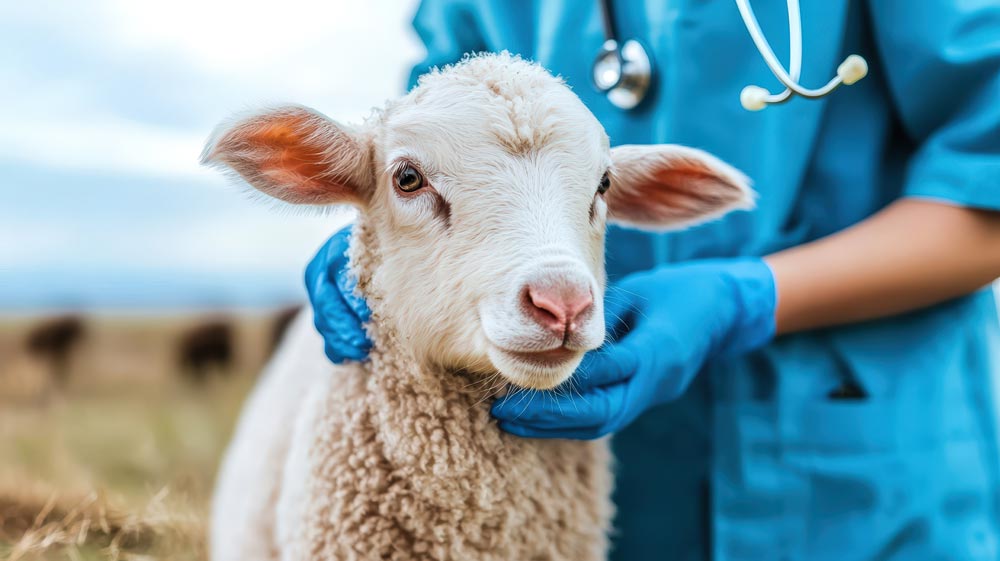
With more than 2,700 premises confirmed since July and a new clinical diagnosis route for private vets in England, bluetongue is now part of routine farm animal practice. Here is what practitioners need to know about diagnosis, vaccination and client advice.
A season of a different order
There have been 2,780 confirmed bluetongue cases (premises) in the UK in the 2026 to 2027 season, according to Defra and APHA figures published on 6 October 2026. That comprises 2,280 premises in England, 457 in Wales and 43 in Scotland, with none so far in Northern Ireland. Most cases have been confirmed as BTV-3. Some premises in England were confirmed without the serotype being identified. A further 722 premises with suspicious clinical signs were awaiting results.
That compares with 348 cases in Great Britain across the whole 2025 to 2026 season. The first case this season was confirmed on 10 July. Since late September, England has typically seen between 40 and 95 new confirmations a day. Devon accounts for more than 1,000 premises, but cases now range from Cornwall to Northumberland, and in Scotland from Dumfries and Galloway to Aberdeenshire. No BTV-8 has been confirmed this season. However, Defra notes that some bluetongue is circulating in northern Europe and that its risk assessment includes serotypes not currently circulating in England.
The virus and its vector
Bluetongue is an orbivirus spread mainly by Culicoides biting midges. This season, positives have been recorded in sheep, cattle, goats, deer, alpacas, llamas and bison. Bluetongue does not affect people or food safety.
Midges became active again on 31 March 2026, and Defra says temperatures remain high enough in many parts of the UK for the virus to develop inside the midge. Infection can also spread through germinal products (semen, ova and embryos).
Clinical presentation
Sheep make up most confirmed premises. APHA case reports describe a consistent picture:
- fever, lethargy and inappetence
- swelling of the face, lips and muzzle, with a crusted nose and nasal discharge
- erosions and ulcers on the tongue, lips, gums and dental pad
- lameness with swelling or pain at the coronary bands, and stiffness or reluctance to stand
- in cattle, ocular and nasal discharge, crusting around the muzzle, drooling and lameness
Several reports describe deaths in affected flocks. Because bluetongue infection in pregnant animals can be associated with abortion and congenital abnormalities, practices may want to prepare clients for possible reproductive losses over winter and spring.
Faster diagnosis in England
On 11 September 2026, Defra and APHA introduced a vet-led diagnostic route in England. Where clinical signs are clear, private vets can diagnose bluetongue on examination, and APHA then formally confirms the case. This means straightforward cases no longer have to wait for laboratory results. Private vets can also now report suspect cases to APHA through an online form.
Disease controls have not been relaxed. Where another notifiable disease, including foot and mouth disease, cannot be ruled out, the usual reporting and laboratory testing continue. Suspicion must be reported by law: call 03000 200 301 in England or 0300 303 8268 in Wales, or contact the local APHA Field Services Office in Scotland.
Vaccination: setting expectations
Three BTV-3 vaccines are authorised in the UK: Bluevac-3, BULTAVO 3 and Syvazul BTV 3. All are prescription-only. In England, Wales and Scotland, vets must notify Defra within seven days of prescribing, and keepers must report vaccinations within three days.
Client conversations need to be precise, because the authorised claims differ by product and species. All three products carry claims in sheep relating to viraemia and clinical signs. In cattle, BULTAVO 3 is authorised to prevent viraemia and clinical signs, while Bluevac-3 and Syvazul BTV 3 are authorised only to reduce viraemia. Practitioners should check each product’s SPC before advising.
Timing also matters. Syvazul BTV 3’s onset of immunity is four weeks in sheep and three weeks in cattle, counted from completion of the primary course. None of the products protects against BTV-8. Defra continues to urge keepers to discuss vaccination with their vet, noting that healthy animals can still benefit even where disease is circulating.
Zones and movements
England, Wales and Scotland are each covered by a country-wide restricted zone, with Scotland’s extended to the whole country on 3 October. Within England, animals can move without a specific bluetongue licence or pre-movement test, and movements between England and Wales need no vaccination or other mitigation. Clients moving animals into or within Scotland should check the current GOV.SCOT guidance. Freezing germinal products in England requires a licence and testing, at the keeper’s cost.
Practical priorities for practices
- Keep a low threshold for suspicion in animals showing fever, facial swelling, oral lesions or lameness, and use the online reporting route.
- Review vaccination plans now, taking account of onset of immunity, species-specific claims and BTV-3-only cover.
- Prepare clients for possible reproductive losses over winter and spring.
- Point eligible clients in England to funded vet visits under the Animal Health and Welfare Pathway.
Disease pressure is expected to continue until temperatures fall, so the coming weeks remain critical.
Source: Defra/APHA (GOV.UK), Scottish Government. Figures correct as of 6 October 2026.